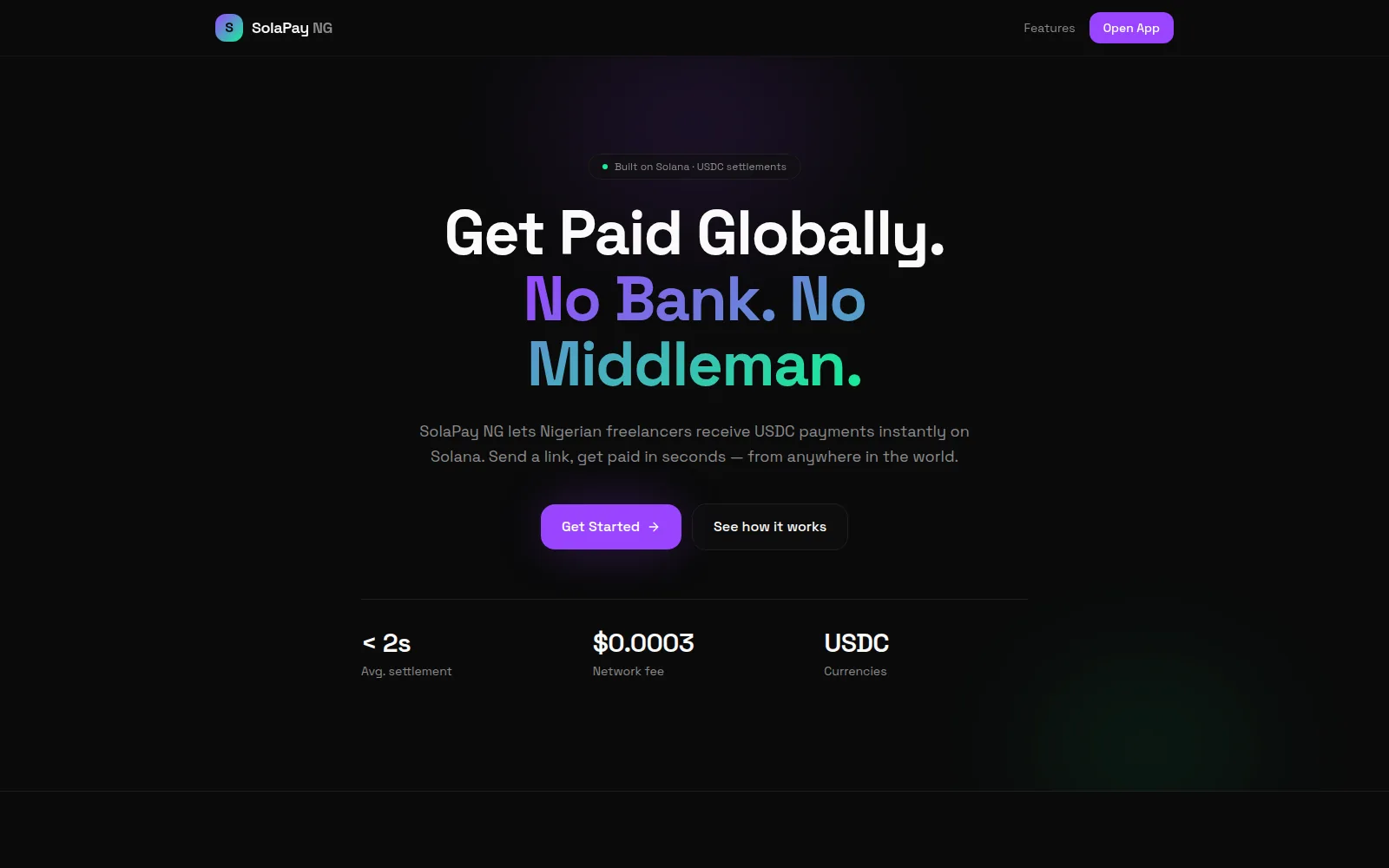
SolaPay NG web app
A payment link that settles a transfer on Solana’s devnet test network.
Limit: Devnet only. Sends native SOL only, and freelancer data is mock.
- Role
Full-Stack Developer (AI-Assisted) & Technical Writer
- Status
Built for a Solana hackathon and deployed on devnet during the event. It is no longer live; the full code is on GitHub.
- Stack
- Links




The problem
Freelancers paid from abroad lose days and a slice of every invoice to correspondent banking. The interesting part is not the wallet — it is the whole path from a link in a chat message to a settled on-chain transfer.
What I built
I prototyped the complete path end to end before adding any complexity: generate a payment link, resolve the amount, connect a wallet, sign, and settle on-chain. Escrow was deliberately staged last — the code for it exists but is not wired in, because the simpler path had to work first.
- Next.js App Router + TypeScript + Tailwind CSS with shadcn/Radix components.
- Real Solana wallet integration using the Phantom and Solflare adapters over a custom RPC endpoint.
- Create-payment flow generating a shareable payment link from the freelancer side.
- Pay page resolving the amount, converting USD to SOL through a CoinGecko price lookup, then signing and confirming a native SOL transfer on devnet.
- Dashboard reading the live wallet balance and the most recent on-chain signatures.
The result
A hackathon build where a payment link led to a real wallet interaction and a confirmed devnet transaction, with the dashboard reading live chain state rather than fixtures. The deployment is no longer running; the source is public.
What it does not do
The marketing copy promises USDC settlement while the implementation transfers native SOL only — the SPL-token path is not built. Freelancer records and earnings are mock data. The Anchor escrow module derives program addresses from placeholder IDs and is dead code: the Anchor client is not even installed. There is no backend, so links live in the URL rather than a database.